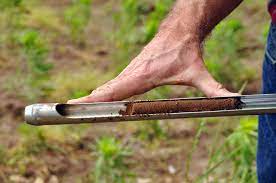
Before starting an agriculture work or buying land an important thing to do is conduct a soil test.
Soil test will provide to a large extent composition of the soil, pH of the soil which tells if the soil is acidic (below 7) or alkaline (above 7) or neutral (7). Generally soils of 5-6.6 is considered as suitable for most crops, pulses and vegetables and for gardens. Some crops and vegetables are very sensitive to low or high soil pH and therefore will not grow under these conditions to the best production potential. Some crops will not germinate if the pH is below 4.8 measure it with laqua twin Calcium ION meter.
Using lime at a suitable rate can help but if the pH is very low (below 4.7) then it is very difficult to correct the soil pH with lime in a short time.
Soil test will also provide the information regarding if the soil has too much of Nitrogen ( from either urea or NPK), Phosphorus and Potassium. Very high levels of nitrogen generally results in farmer using excessive nitrogen from fertilizers thinking it will increase production. However high levels of nitrogen can result in making some crops less productive due to diseases. Deficiency of some trace elements such as molybdenum also can cause growth reduction.
High levels of nitrogen also results in being carried by water (run off) when there is high rainfall and this will go and flow into the rivers and creeks. This will cause weeds, algae (toxic) and bacteria (toxic) to grow near the river beds and in the water. This water will enter the water table and run into the water humans drink. When humans and cattle or sheep drink this water it will cause diseases in humans and animals. This will also waste nitrogen as studies have shown that about 40% of nitrogen runs off in water.
 Smart Blogger